
The Smartest Ways to Mark Your Property Boundaries on Rural Land
Strategic Land Solutions
Owning rural land is more than a transaction — it’s a moment. That first walk along your property lines, standing at a corner that’s officially yours, is one of the most grounding experiences in land ownership. But that feeling only works when you actually know where your boundaries are.
Clear boundary markers protect your investment, prevent accidental encroachment, and set the tone for good neighbor relationships. At Strategic Land Solutions, we encourage every landowner to take boundary marking seriously — not out of fear, but out of pride and stewardship.
Below is a practical, Arizona‑friendly guide to marking your land the right way.
Start With a Professional Survey
Before you think about paint, posts, or fencing, you need certainty. A licensed surveyor is the only professional who can legally identify your property corners and establish your true boundary lines.
A surveyor will:
Locate your corners using your deed’s legal description
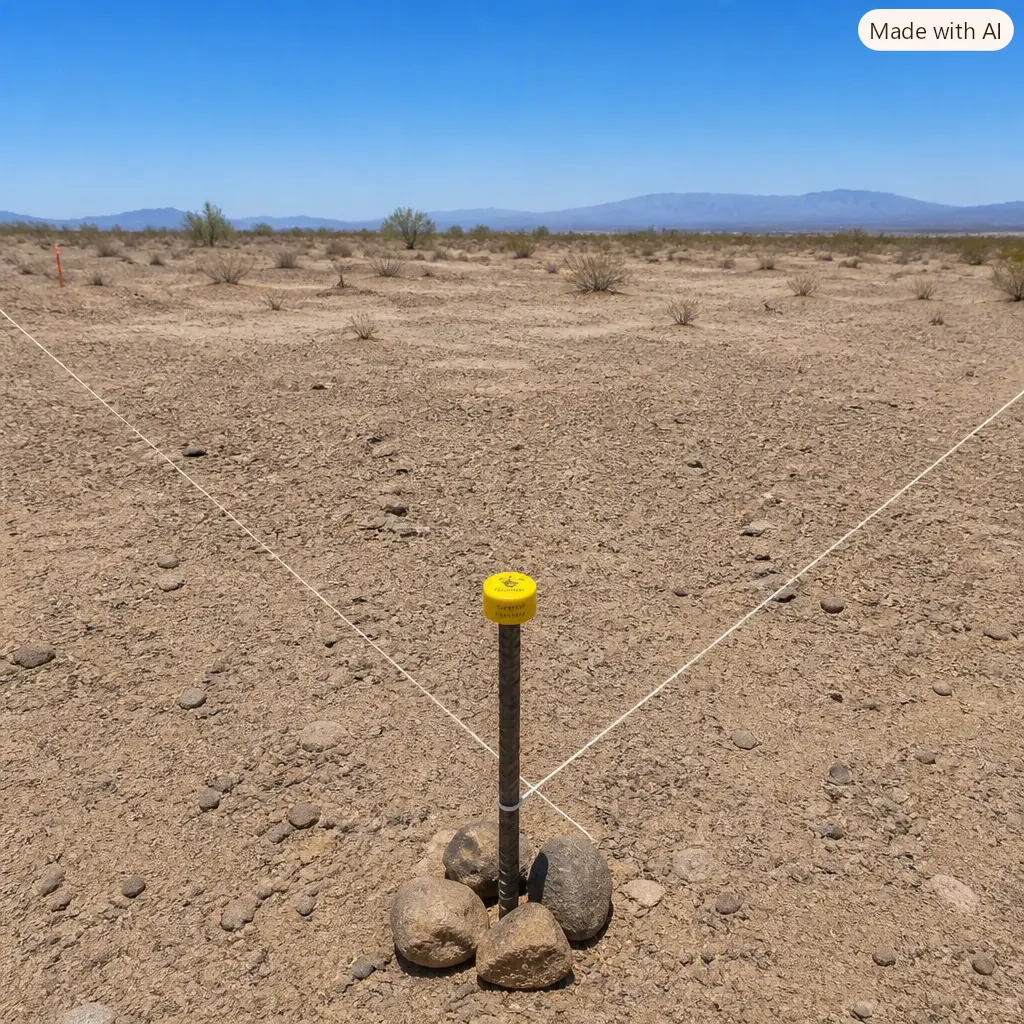
Install official markers (usually iron rebar or pipe)
Provide a map and documentation you’ll use for years
Think of a survey as boundary insurance. It prevents disputes, protects you during improvements, and gives you confidence every time you walk your land.
Once your corners are marked:
Photograph each corner
Save GPS coordinates if possible
Store your survey documents securely
These become your reference points for every future project.
Choose the Right Boundary Marking Method
Once you know exactly where your lines are, you can make them visible. Your marking method depends on your land, your goals, and how permanent you want the markers to be.
Here are the most common and effective options.
Flagging & Ribbon: Fast, Affordable, and Temporary
Surveyor’s tape (pink, orange, or yellow) is perfect for quick visibility. It’s inexpensive, easy to tie, and great for your first walk of the property or prepping for a fence installation.
Pros:
Cheap
Highly visible
Easy to install
Cons:
Temporary (weather and wildlife will remove it over time)
Pro Tip: Tie ribbon at eye level every 20–30 feet along the line. Wrap it twice around the tree or post so it doesn’t slip.
Paint Blazing: A Classic Rural Method
Painting boundary trees is a long‑standing tradition across rural America. It’s simple, durable, and easy to follow.
Use bright exterior paint — orange, yellow, or barn red. Paint trees near your survey corners and add blazes along the line between corners.
Longevity: 5–10 years before needing a refresh.
Neighborly Note: If a tree sits right on the line, talk to your neighbor first. Clear communication builds trust and prevents misunderstandings.
Corner Posts: Permanent and Easy to Find
Many landowners add visible corner posts in addition to the surveyor’s markers. These might be:
Treated 4×4 posts
Metal T‑posts
Decorative stone markers
You can paint them, add reflective tape, or label them with your name or parcel number.
Corner posts are especially helpful when your corners don’t have trees nearby or when you want year‑round visibility.
T‑Posts & Wire: A Defined Line Without Full Fencing
If you want a clear physical boundary without committing to a full fence, T‑posts with a single strand of wire work well.
Install posts every 10–20 feet and run smooth wire or electric line between them. It’s visible, functional, and more permanent than paint or ribbon.
Important: Check county setback rules before installing anything near the property line.
Full Fencing: The Ultimate Boundary Marker
A fence is the most definitive way to mark your property. Whether you choose barbed wire, woven wire, split rail, or something decorative, fencing provides:
Clear boundaries
Livestock containment
Security
Aesthetic appeal
It’s also the most expensive and maintenance‑heavy option, so plan carefully.
Most landowners set fences a few inches or feet inside the actual property line to avoid disputes and simplify maintenance.
Make Your Boundary Marks Last
Boundary marking isn’t a one‑and‑done task. Maintenance keeps your lines clear and prevents future issues.
Walk Your Lines Regularly
Do a full boundary walk once or twice a year. You’ll catch:
Faded paint
Fallen flagging
Leaning posts
Encroachment (brush piles, trails, or neighbor activity)
Refresh Paint Every 5–10 Years
Even the best paint fades. Repainting is easier than re‑locating the line from scratch.
Document Everything
Keep:
Photos of corners and markers
Survey documents
Notes on installation dates
Any communication with neighbors
This documentation becomes invaluable if you ever sell your land.
Check County Requirements
Some counties regulate fencing, roadside markers, and setback distances. A quick call can save you from redoing work.
What NOT to Do
A few common mistakes can cause big headaches:
Don’t rely on old fences. They’re rarely accurate.
Don’t paint random trees. Only mark trees on or near the actual line.
Don’t guess with neighbors. If there’s uncertainty, get a survey and communicate clearly.
Special Tips for Recreational Landowners
If you use your land for camping, hunting, or exploring, clear boundaries matter even more.
Consider adding:
Interior trail markers to guide guests
Gate and entry markers for easy access
High‑visibility posts for winter or dense vegetation seasons
These small upgrades make your land safer and easier to enjoy.
The Bottom Line
Marking your property boundaries is one of the simplest ways to protect your land and enjoy it with confidence. You don’t need a fortress‑level fence, but you do need clarity.
Start with a professional survey, choose marking methods that fit your land and lifestyle, and maintain those markers over time. The peace of mind you gain — knowing exactly what’s yours and honoring your neighbors’ land as well — is part of what makes rural ownership so rewarding.
At Strategic Land Solutions, we believe good land stewardship starts with knowing your boundaries. If you ever need help understanding your parcel, planning improvements, or navigating county requirements, we’re here to guide you every step of the way.