**Is It Legal to Camp on Your Own Land?
A Strategic Land Solutions Guide for New Landowners**
Owning rural land comes with a special kind of freedom — the quiet mornings, the open sky, and the chance to enjoy your property on your own terms. Naturally, one of the first things new landowners want to do is camp on their land.
But before you roll out the tent or park the RV, there’s an important question:
Can you legally camp on your own land?
At Strategic Land Solutions, we help landowners navigate these rules every day. Here’s the clear, practical breakdown you need to enjoy your land confidently and responsibly.
The Short Answer
In most rural areas across the United States, yes — you can camp on your own land.
But the real authority isn’t the state… it’s your county.
Counties decide:
How long you can camp
Whether permits are required
RV vs. tent rules
Water and waste requirements
Seasonal fire restrictions
A quick call to your county planning or zoning office is the smartest first step.
Why County Rules Matter More Than State Laws
States rarely restrict camping on private land. Counties, however, often regulate:
Duration limits (30–180 days per year)
Temporary use permits
Distance requirements from property lines or waterways
Fire safety rules
Waste disposal requirements
Whether RVs are allowed
This is why Strategic Land Solutions always encourages buyers to verify county rules early — it protects your investment and keeps your experience stress‑free.
What Determines Whether You Can Camp?
Zoning
Agricultural, rural residential, and open‑space zoning typically offer the most flexibility.
Temporary vs. Permanent Use
Short-term recreational camping is usually allowed.
Full-time living in an RV or tent often requires:
A temporary use permit
Progress toward a permitted dwelling
Approved utilities
Existing Structures
A permitted shed or cabin can extend how long you’re allowed to stay.
Fire Restrictions
Especially in Arizona and western states, seasonal fire bans are serious and strictly enforced.
Water & Waste
Extended stays may require:
A well
Septic
Approved portable waste systems
General State Patterns
Every county is different, but here’s the broad overview:
Highly Permissive States
Arizona (rural counties), Texas, Montana, Wyoming, Idaho, New Mexico, Oklahoma, Arkansas, Alabama, Mississippi, South Dakota, North Dakota.
Moderately Regulated States
California, Oregon, Washington, Michigan, Minnesota, Wisconsin, Florida, Georgia, Tennessee, Kentucky, North Carolina.
More Complex or Strict States
New York, New Jersey, Pennsylvania, Virginia, Connecticut, Massachusetts, Maryland, Hawaii, and urban Midwest counties.
Strategic Land Solutions Tips for New Landowners
1. Call Your County
Ask about recreational camping in your zoning district.
Have your parcel number ready.
2. Ask These Key Questions
How many days per year can I camp?
Do I need a temporary use permit?
Are RVs allowed?
What fire restrictions apply?
Do I need water or waste facilities?
3. Get It in Writing
Document who you spoke with and what they confirmed.
4. Start Small
Begin with a weekend to learn the land and understand the rules.
5. Be a Good Neighbor
Respect noise, fire safety, and property boundaries.
6. Plan for Waste
Use approved portable toilets, composting systems, or septic solutions.
Real-World Scenarios
Weekend Camping
Almost always allowed in rural counties.
Extended Stays
Often allowed with:
Temporary permits
Waste/water compliance
Fire safety measures
Full-Time Living
Heavily regulated. Counties typically require:
A building permit
Progress toward a code-compliant dwelling
Approved utilities
The Strategic Land Solutions Bottom Line
Camping on your land is one of the greatest joys of ownership. With a little preparation — and a quick call to your county — you can enjoy your property legally, safely, and confidently.
Your land is yours to explore.
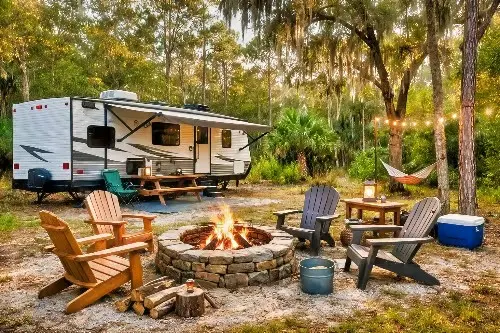
Your memories start the moment you pitch that first tent or park your RV under the stars.
At Strategic Land Solutions, we’re here to help you understand the rules, protect your investment, and enjoy your land the right way.